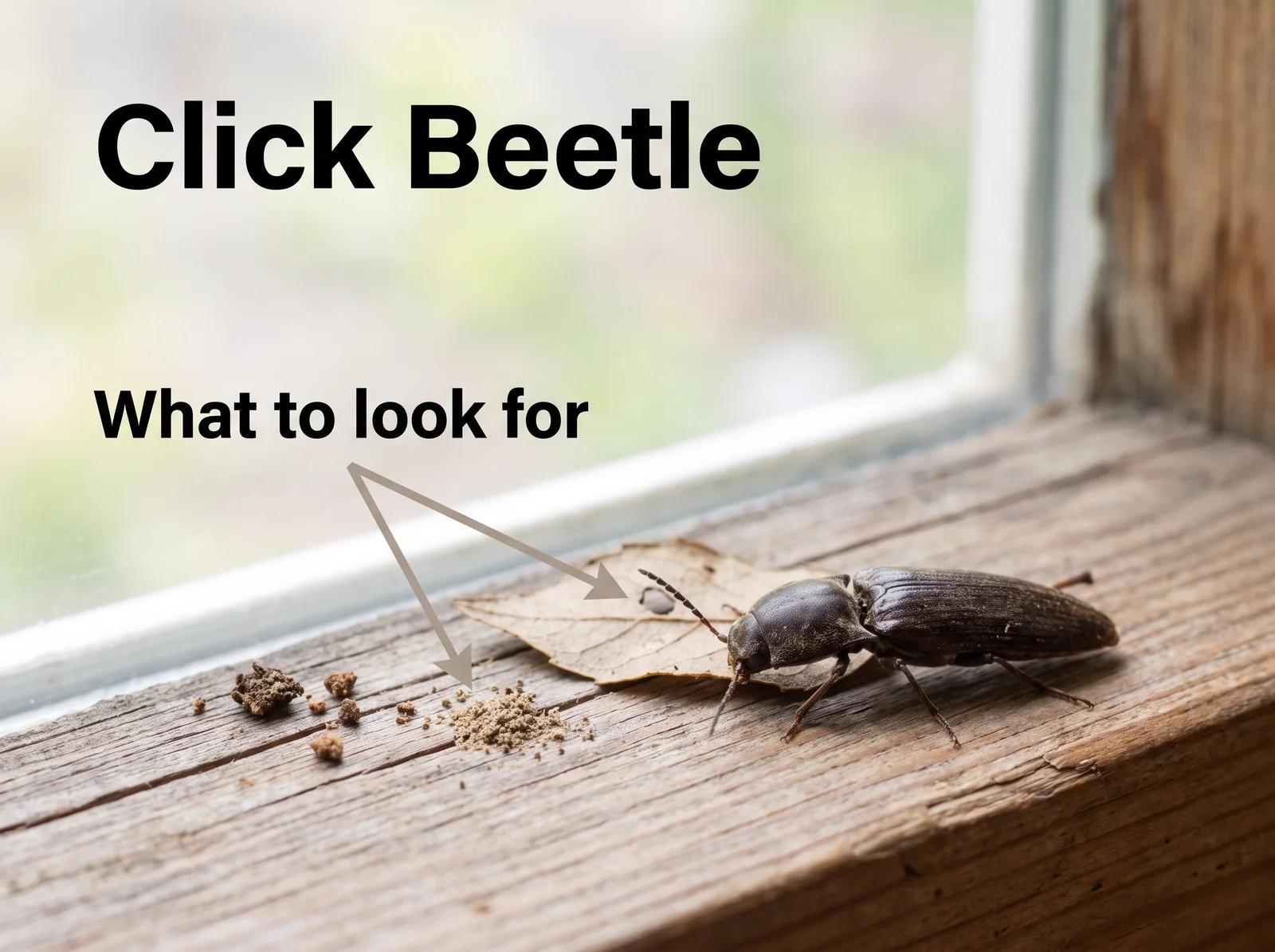
What should you do on the first day you see a click beetle?
Start by staying calm. A single click beetle inside is common and doesn't mean you have an infestation. Your first-day plan is simple: identify it, remove it, and check nearby entry points.
Catch the beetle with a cup and index card, or a vacuum, and release it outside away from the house. There's no need for sprays at this stage. Most people who want to get rid of click beetle sightings just need to remove the one they found and check how it got in.
While you're at it, do a quick walk-through of the room. Look at window screens, door sweeps, and any gaps around utility lines. This five-minute check often explains the whole situation.
Are you sure it's a click beetle?
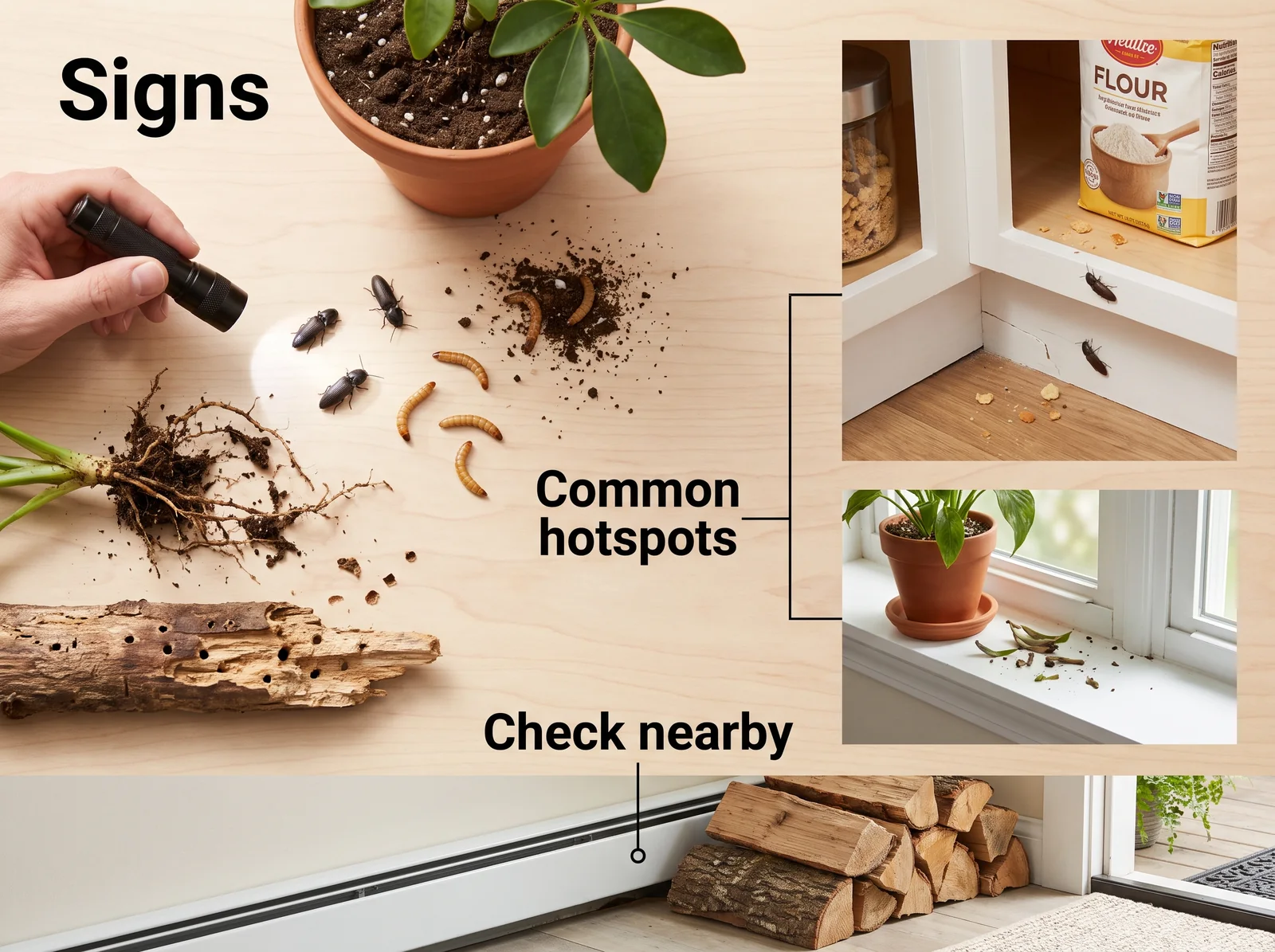
Before you plan how to get rid of click beetle activity, confirm you're dealing with the right insect. Click beetles are narrow, oval, and usually brown, black, or dull gray. Their most distinct feature is the clicking snap they make when flipped on their back, which helps them right themselves.
They're often confused with darkling beetles, ground beetles, or even small stink bugs. If you're not certain, a photo comparison against a few identification sources can save you from treating for the wrong pest.
Look closely at the head and body shape too. Click beetles have a somewhat flattened, elongated body with a pointed rear end and a hinge-like segment behind the head. That hinge is what powers the click and the jump.
Where are click beetles coming from in your home?
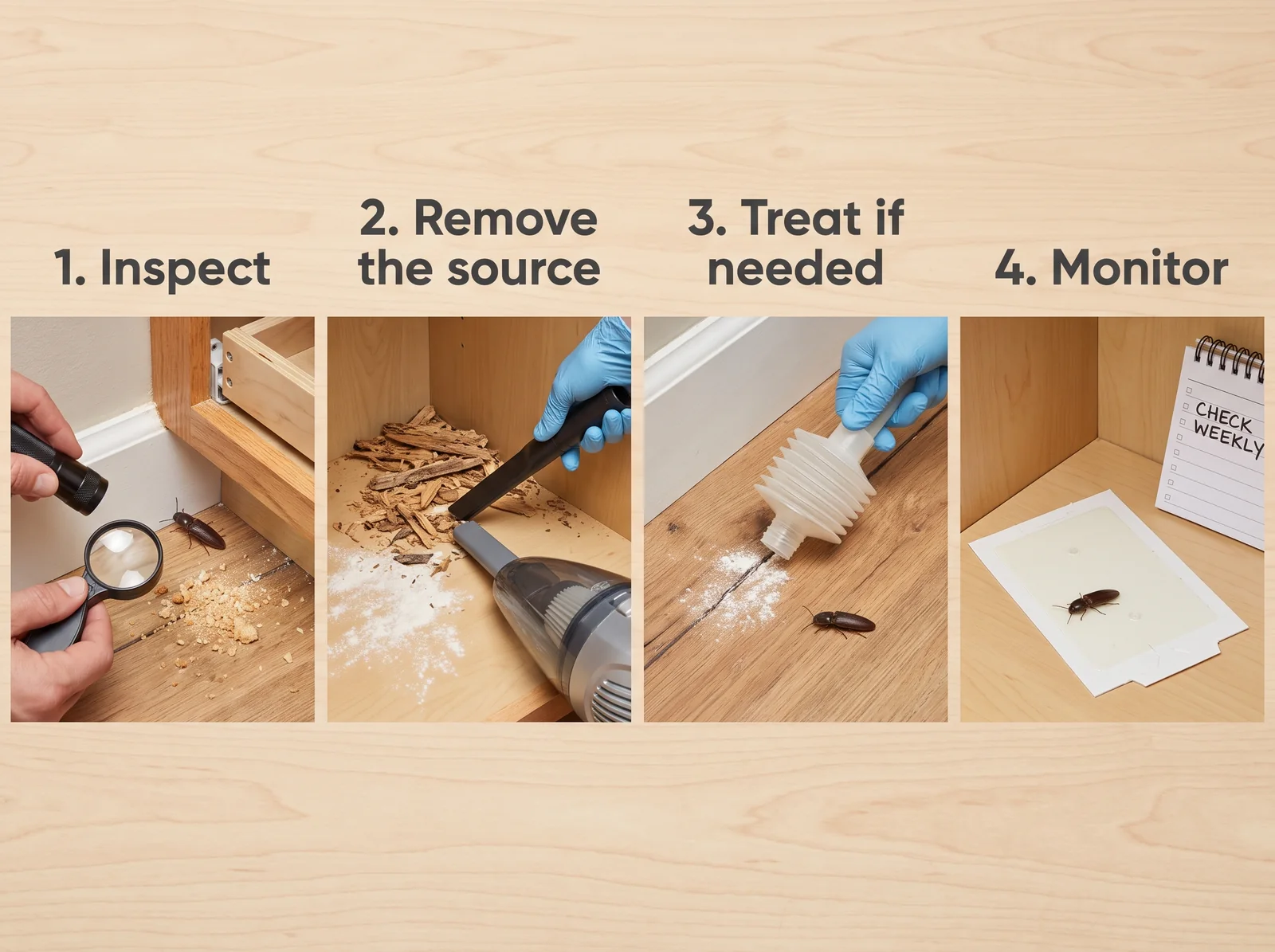
Click beetles almost always come from outside. They're drawn to lights, warm surfaces, and gaps around doors and windows. Finding the source is more useful than repeatedly removing beetles one at a time.
Walk the exterior of your home in daylight. Check for gaps under door thresholds, torn window screens, and openings where pipes or wires enter the house. Porch lights and bright indoor lights visible from outside are common draws.
Inside, check basements, garages, and rooms with ground-level windows. These areas connect most directly to soil and outdoor debris, which is where click beetle larvae (wireworms) live before adults emerge.
If you have mulch beds, leaf piles, or stacked wood close to the foundation, note that too. These give adults an easy hiding spot right next to your exterior walls.
What's the best way to get rid of click beetle activity?
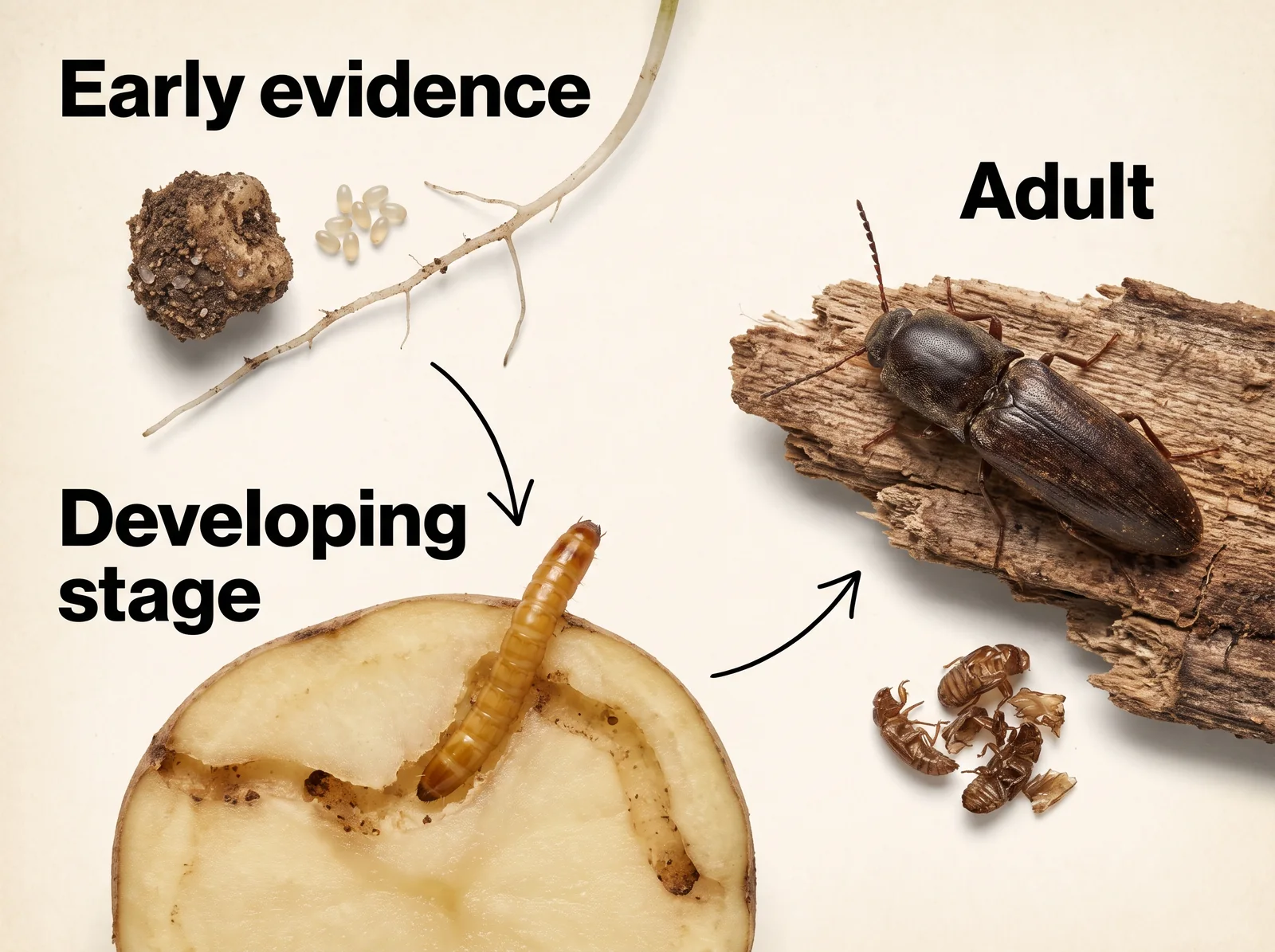
For most homes, the best way to get rid of click beetle problems is physical removal plus exclusion, not chemical treatment. Start with removal: catch and release beetles you find, and vacuum up any that appear near lights or window sills.
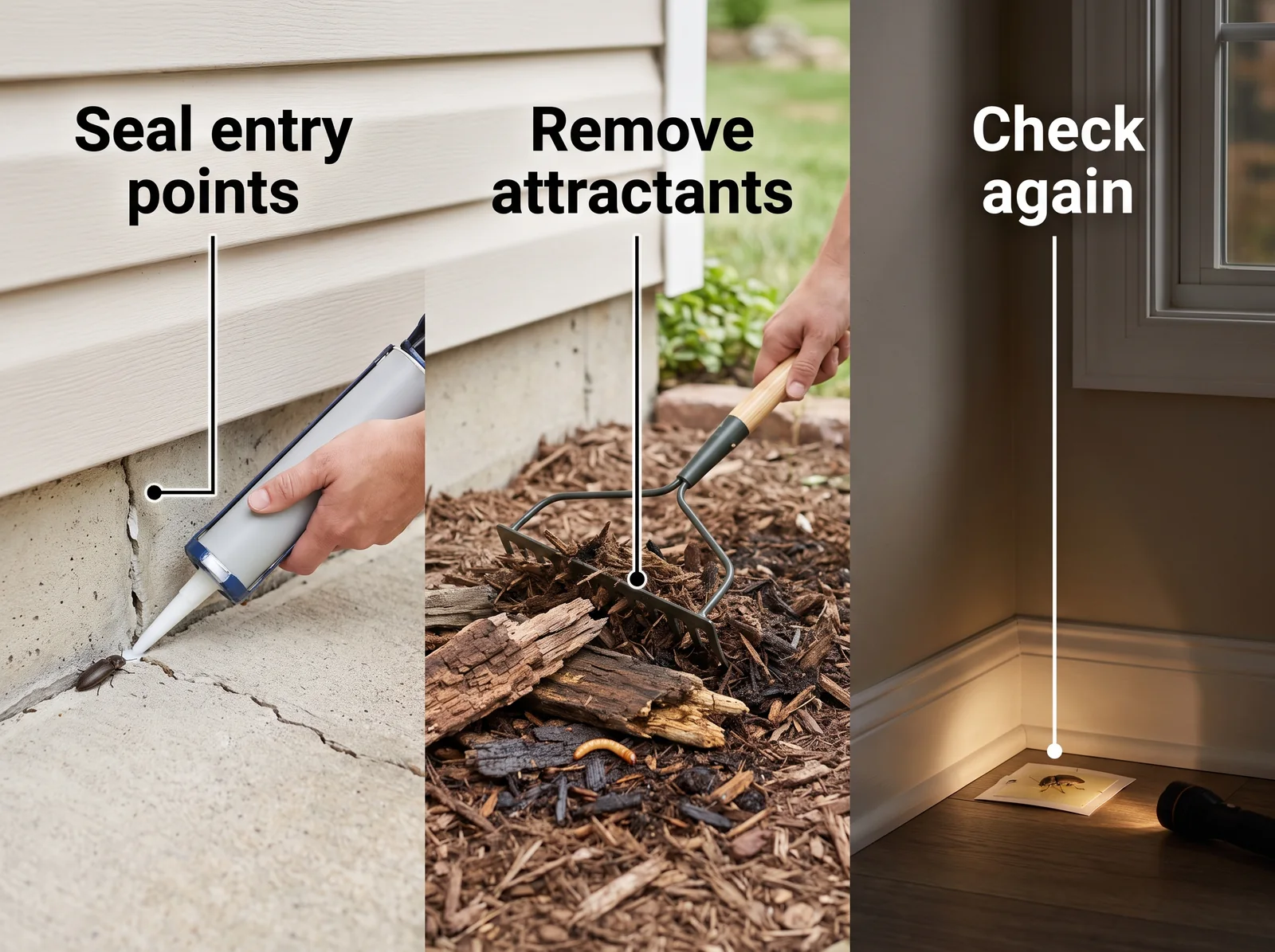
Next, work on exclusion. Seal gaps around doors and windows with weatherstripping, repair torn screens, and caulk small openings where utility lines enter the house. This step does more to reduce future sightings than anything else.
Clear debris from around your foundation, including mulch piled against siding, leaf litter, and stacked wood. Click beetles and their larvae favor these damp, sheltered spots.
If beetles are entering through exterior lighting, switch to yellow or amber bulbs, or reduce the time lights stay on at night. Attraction to light is one of the biggest reasons adults wander indoors.
- Seal gaps around doors, windows, and utility entry points
- Remove mulch, leaf litter, and debris from the foundation line
- Reduce bright white outdoor lighting at night
- Vacuum or hand-remove any beetles found indoors
How do you know the click beetle problem is actually gone?
Monitoring is the step people skip, but it's what confirms whether your effort to get rid of click beetle activity actually worked. Give it one to two weeks after sealing gaps and clearing debris before deciding the problem is resolved.
Keep a simple log. Note the date, room, and time of day each time you spot a beetle. A pattern, like sightings always near one window, points you back to a specific entry point you may have missed.
Sticky monitoring traps placed near suspected entry points can help you track activity without guessing. If sightings drop to zero after your exclusion work, you've likely solved the source.
How do you keep click beetles from coming back?
Prevention is mostly about maintaining what you already fixed. Recheck door sweeps and window screens each season, since weatherstripping wears down over time.
Keep mulch a few inches away from your foundation and avoid letting it pile against siding. Trim back grass and plants that touch exterior walls, since these create shaded, moist hiding spots.
If you have a lawn with a history of grub or wireworm damage, that's the larval stage of click beetles developing in soil. Healthy lawn care, including proper watering and avoiding overwatering, makes the soil less appealing to them.
Outdoor lighting habits matter long-term too. Motion-sensor lights or amber bulbs near entry doors reduce the nightly draw that brings adults close to your house in the first place.
Are click beetles dangerous to kids or pets?
Click beetles don't bite, sting, or carry disease. They're harmless to touch, and the clicking sound and jumping motion, while startling, aren't a safety concern for children or pets.
The main risk is curiosity. Pets may try to eat or paw at a beetle, which usually just means the beetle escapes or gets swallowed with no lasting effect. If a pet shows unusual symptoms after contact with any insect, call your veterinarian.
You don't need to isolate rooms or restrict access for a single beetle sighting. Simple removal is enough, and there's no reason to use pesticides around play areas or pet spaces for this pest.
When does a click beetle problem need a professional?
Most click beetle sightings resolve with removal and exclusion alone. But if you're seeing beetles daily over several weeks despite sealing entry points, or if your lawn shows patchy dead grass suggesting a wireworm issue, it's worth involving a professional.
A licensed pest control professional can inspect your property, confirm the source, and recommend a properly labeled treatment if one is actually needed. They can also identify whether what you're seeing is truly a click beetle or a similar-looking insect with different habits.
If pesticide use ever becomes necessary, only an EPA-registered product labeled for click beetles and the specific site should be used, applied exactly as the label directs. A professional can make that call safely; guessing on your own isn't worth the risk.
Questions you may still have
Why do I keep finding click beetles in my house?
Click beetles usually enter through small gaps around doors, windows, or utility lines, often drawn in by outdoor lighting at night. They don't nest indoors, so repeat sightings almost always trace back to an unsealed entry point rather than an infestation. Checking screens, thresholds, and exterior lighting habits usually explains why they keep showing up and helps you get rid of click beetle activity for good.
Do click beetles bite people?
No, click beetles don't bite or sting people. They're harmless to handle, and the clicking sound they make is just a defense mechanism to flip themselves upright, not a threat. Any concern usually comes from the surprise of the jump or noise, not any actual physical risk to you or your family.
What attracts click beetles to homes?
Bright outdoor lighting, gaps around doors and windows, and debris like mulch or leaf litter near the foundation all attract click beetles. They're most active outdoors in spring and early summer, and lit windows or porch lights at night are one of the biggest draws that lead them inside by accident.
Can click beetles damage my lawn?
Adult click beetles don't damage lawns, but their larvae, called wireworms, live in soil and can feed on grass roots and garden plants. If you notice patchy, thinning grass along with adult click beetle sightings, it's worth checking soil health or consulting a lawn care professional about wireworm activity.
Is it safe to vacuum up a click beetle?
Yes, vacuuming is a safe and effective way to remove a click beetle without chemicals. Empty the vacuum canister or bag outdoors afterward. This method works well for one-off sightings and is often all you need alongside checking nearby windows or doors for gaps.